

『Flow Meter Logger Setups: Remote Battery-Powered Telemetry for River Monitoring』Related information(flow rotameter|digital flow meter|balo meter|hydraulic flow meter|volumetric meter|positive displacement meter|pitot tube flow meter|displacement meter|cfm meter|variable area flow meter|inline flow meter|differential pressure flow meter|calibrated flow meter|velocity meter|paddle wheel flow meter|oval gear flow meter|anemometer hvac|multiphase flow meter|doppler flow meter|thorpe tube flowmeter|heat flow meter)
Flow Meter Logger Setups: Remote Battery-Powered Telemetry for River Monitoring
Quick Answer: For river monitoring, pair a battery powered data logger with a 4-20 mA or pulse output flow meter. Use a 12 V or 24 V battery with a solar panel sized for at least 30 days of low sun. Electromagnetic or ultrasonic flow meters from Silver Automation Instruments work well for this job because they provide stable signals and low power options.
Why Remote River Monitoring Needs a Battery First Approach
River sites rarely have mains power. A pump station may sit 2 km from the river. Running AC power costs more than the flow meter and logger combined. So the design starts with a battery. In practice, most engineers choose a 12 V or 24 V sealed lead acid or lithium battery. Lithium costs more upfront but handles heat better in Southeast Asia and the Middle East.
We have seen a water utility in Vietnam monitor a river intake with a 24 V lithium battery and a 100 W solar panel. The system ran for 14 months without a battery swap. The key was a logger that slept at 3 mA and only woke up to sample and transmit.
Flow Meter Selection for River Water
For a closed pipe river intake, an electromagnetic flow meter is a solid choice. It has no moving parts and handles suspended solids. Choose a DN50 or DN80 meter for small intakes, or DN150 to DN300 for larger river pump lines. Silver Automation Instruments supplies electromagnetic flow meters with 4-20 mA, pulse, and RS485 Modbus outputs. Pulse output is useful for battery loggers because it wakes the logger only when a pulse arrives. Pulse output saves a lot of battery life.
For open channel river flow, an ultrasonic open channel flow meter with a level sensor is more practical. It measures water level and velocity without a flume or weir in many cases. Connect the flow meter 4-20 mA output to the logger input. Set the logger to scale 4 mA as zero flow and 20 mA as the maximum flow in m3/h.
Logger Power Budget in Real Numbers
Here is the thing about battery sizing. You cannot guess it. Write down the logger sleep current, the sample current, and the transmit current. A typical remote telemetry unit draws 2 mA to 5 mA in sleep mode. During a sample it may draw 20 mA for 5 seconds. During a 4G transmission it may draw 150 mA for 60 seconds. If you sample every 15 minutes and transmit every hour, a 100 Ah battery can last over 6 months with a 50 W solar panel.
Most engineers skip this part. Then the site goes dark after 3 weeks of cloudy weather. For river monitoring in Malaysia or Indonesia, plan for 5 consecutive rain days with almost zero solar output. Add 30 percent margin to the battery capacity. Use a solar charge controller with low voltage disconnect to protect the battery.
Wiring From Flow Meter to Logger
Keep the distance between the flow meter and the logger under 100 meters if you use a 4-20 mA analog signal. Use shielded twisted pair cable. Ground the shield only at the logger end. If the distance is longer, use RS485 Modbus with a battery powered logger that supports Modbus polling. Silver Automation Instruments flow meters support RS485 Modbus on many models. RS485 Modbus avoids signal drift over long cable runs.
For pulse signals, use a dry contact or open collector pulse output. Set the flow meter pulse rate to a value that avoids flooding the logger input. For example, set one puls
Data Transmission and Alarms
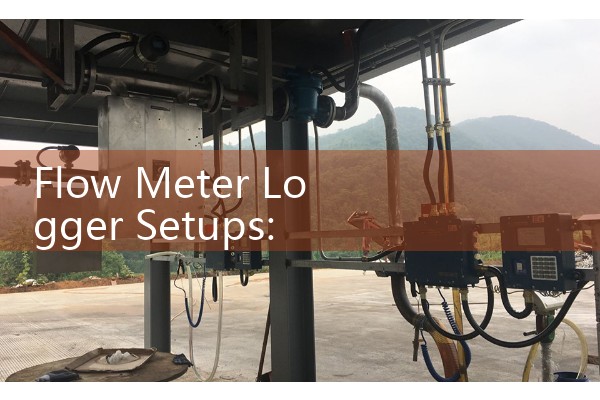
Remote river sites often use 4G LTE or LoRa. 4G works well for a river intake near a city or town. LoRa with a gateway at the pump station works for sites with no cellular coverage. Send data every 15, 30, or 60 minutes. Include flow rate, totalized flow, battery voltage, and logger temperature. This helps the maintenance team plan a site visit before the battery dies.
Set two alarms in the logger. First, a low battery alarm at 11.8 V for a 12 V system or 23.6 V for a 24 V system. Second, a zero flow alarm when the river intake line drops below a minimum flow threshold. These alarms catch pump failures and blocked intake screens early.
Site Example From a Customer in Southeast Asia
Last year a customer in the Philippines asked us for a river monitoring setup for a fish farm intake. The pipe size was DN100. Flow range was 20 m3/h to 80 m3/h. We supplied an electromagnetic flow meter with pulse output and a battery powered logger with 4G transmission. The customer used a 12 V 100 Ah lithium battery and one 80 W solar panel. The system reported flow every 15 minutes. After 8 months the customer still had 45 percent battery capacity.
That site used a simple rule. The flow meter pulse output woke the logger from sleep. The logger logged the pulse count and then went back to sleep. No continuous 4-20 mA loop meant no continuous power drain from the analog circuit. That is the cleanest setup for remote river monitoring.
FAQ on Flow Meter Logger Setups for River Monitoring
What flow meter works best for a battery powered river logger?
For a closed pipe, use an electromagnetic flow meter with pulse output. For an open channel, use an ultrasonic flow meter with 4-20 mA or RS485. Both options work with low power loggers.
How long can a battery powered river logger run?
With a 12 V 100 Ah battery and 50 W solar panel, expect 6 to 12 months. The actual run time depends on sample interval, transmit interval, and solar access. Add margin for rainy seasons.
Can I use a flow meter without an external power supply?
Some loggers provide a switched 12 V or 24 V excitation output for the flow meter. This powers the meter only during sampling. It saves battery life. Check the flow meter startup time before using switched power.
What data should I send from the river site?
Send flow rate, totalized flow, battery voltage, and a site status flag. This gives your team enough data to confirm the river intake is operating and the battery is healthy.
Can Silver Automation Instruments help me choose the right setup?
Yes. Send us your pipe size in DN, flow range in m3/h, river level range in meters, and logging interval. We will suggest a flow meter and logger setup that matches your power budget.
Contact Silver Automation Instruments for a Flow Meter Logger Quote
Tell us your river site conditions. Send us your pressure in bar, temperature in °C, pipe size in DN, and flow range. Our engineers will reply with a flow meter and battery powered telemetry recommendation. Contact Silver Automation Instruments at Tel: +86-25-68650347, Whatsapp: +86-25-52155837, WeChat: +86 15365082610.
 Hot Product
 Related AD