

『Floscan Diesel Fuel Flow Meter Installation: Improving Efficiency for Marine Engines』Related information(flow rotameter|digital flow meter|balo meter|hydraulic flow meter|volumetric meter|positive displacement meter|pitot tube flow meter|displacement meter|cfm meter|variable area flow meter|inline flow meter|differential pressure flow meter|calibrated flow meter|velocity meter|paddle wheel flow meter|oval gear flow meter|anemometer hvac|multiphase flow meter|doppler flow meter|thorpe tube flowmeter|heat flow meter)
Floscan Diesel Fuel Flow Meter Installation: Improving Efficiency for Marine Engines
Quick Answer: A diesel fuel flow meter on a marine engine gives direct fuel consumption data and helps you detect overfueling or injector wear before major damage. Silver Automation Instruments supplies oval gear flow meters and Coriolis mass flow meters for diesel lines from DN10 to DN100. Send your pipe size, flow range in liters per hour, pressure in bar, and fuel temperature in °C for a quote.
Why Marine Diesel Flow Measurement Matters
Tank dips do not show short term fuel consumption changes. A marine engine can burn 5 to 10 percent more fuel due to injector wear, pump timing drift, or hull fouling. Without a flow meter, this loss looks like normal fuel use.
We have seen this on customer sites many times. A fishing vessel in Indonesia burned 42 liters per hour at cruise. After a fuel pump repair, consumption rose to 46 liters per hour. A single diesel flow meter on the supply line showed the new pump was overfueling. The adjustment saved about 300 liters per month.
Floscan Installation Basics on Marine Engines
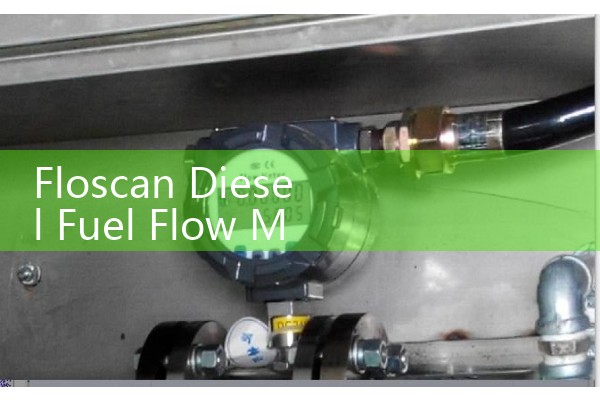
Floscan diesel fuel flow meter installation on older marine engines usually uses a positive displacement sensor in the supply line. The sensor sits between the final fuel filter and the injection pump. Some systems add a second sensor on the return line. The flow computer subtracts return flow from supply flow to get net engine consumption.
Most engineers skip the return line sensor on small engines. For engines under 300 kW, one meter on the supply line is often enough if return flow is small and steady. But on high pressure common rail engines, return flow can be 30 to 50 percent of supply flow. Those engines need two meters or a Coriolis meter configured for net flow.
Sensor Placement and Piping Requirements
Because air pockets cause oval gear flow meters to read high, install the meter after the final fuel filter and the air vent point. A short clear hose section before the meter helps you see air before it hits the sensor.
Mount an oval gear flow meter with the shaft horizontal. Keep the meter away from exhaust manifolds and turbochargers. Diesel at 80 °C can affect seals and electronics. For Floscan style positive displacement meters, no long straight run is needed. But you still need a 60 mesh strainer upstream. Rust and sediment from day tanks can lock an oval gear rotor. A strainer with a differential pressure indicator tells you when to clean the element.
For Coriolis mass flow meters, support the meter body on both sides. Marine engine vibration can disturb the zero point. Do not mount a Coriolis meter on a flexible engine mount.
Signal and Zone Requirements
Most marine diesel flow meters run on 12 VDC or 24 VDC. Some Floscan units use 12 VDC from the instrument panel. Modern systems use 4-20 mA HART or pulse output. The 4-20 mA signal is easier to integrate with a PLC, a paperless recorder, or a vessel monitoring system.
For a NMEA 2000 backbone, a pulse to NMEA converter may be needed. Check the signal type before ordering. A customer in Singapore replaced an old Floscan gauge with a 4-20 mA HART flow meter on a workboat. The new signal went to an engine monitoring system and reduced manual logging by one hour per day.
If the meter is installed in a fuel handling space classified ATEX Zone 1, select an intrinsically safe version. Tell the supplier the zone classification and the gas group. A meter approved for Zone 2 is not automatically safe for Zone 1.
Calibration Notes
Oval gear flow meters are usually calibrated for di
Here is the thing. Calibration on a vessel does not need a laboratory. Run the engine at a fixed throttle setting for 30 minutes and compare the meter total to a calibrated bucket or a weigh scale. Repeat at two flow rates. This catches gross errors.
Common Issues Seen on Customer Sites
Air in the fuel is the number one cause of bad readings. Bleed air after a filter change. Undersized meters are also common. An oval gear meter sized for 5 to 100 L/h will be damaged if the engine flows 400 L/h. Check the flow arrow before installation. The arrow points from tank to engine.
So before you order, confirm the maximum and minimum flow range. Do not select a meter based on pipe size alone. Auxiliary engines often flow 5 to 300 L/h. Main propulsion engines can flow 200 to 2500 L/h. Pipe size may still be DN15 or DN25.
Silver Instruments Diesel Flow Meter Options
Silver Automation Instruments offers two practical choices for marine diesel. The oval gear flow meter suits small and medium engines. It handles 2 to 100 cP viscosity, has 0.5 percent accuracy, and needs no long straight run. Sizes from DN4 to DN80 cover most auxiliary and generator engines. The Coriolis mass flow meter suits large engines, bunker measurement, and custody transfer. It measures mass flow in kg/h, density, and temperature. Accuracy is 0.2 percent for liquid.
A typical main engine line of DN25 with diesel flow from 100 to 2000 L/h at 8 bar and 40 °C works well with a Coriolis mass flow meter. A typical auxiliary generator line of DN15 with diesel flow from 10 to 300 L/h works well with an oval gear flow meter and pulse output. Both can be supplied with 4-20 mA HART, Modbus RTU, or local display.
Contact and Quote
Send the pipe size in DN, diesel flow range in liters per hour or kg/h, operating pressure in bar, fuel temperature in °C, and the signal output you need. Also tell us the engine type and whether the meter is for supply line, return line, or net consumption. Contact Silver Automation Instruments by Tel: +86-25-68650347, Whatsapp: +86-25-52155837, or WeChat: +86 15365082610. You may also visit flow-meter.com.au.
Frequently Asked Questions
Which flow meter type is best for a marine diesel engine? An oval gear flow meter is best for small and medium engines. A Coriolis mass flow meter is better for large engines, high return flow, or when you need mass flow in kg/h.
Can I install one flow meter on the supply line only? Yes, if return flow is small and steady. For common rail engines with high return flow, use a supply and return meter or a Coriolis meter configured for net flow.
Does a diesel flow meter need a strainer? Yes. A 60 mesh strainer upstream protects oval gear rotors from dirt and rust particles. Clean the strainer when differential pressure increases.
What signal output should I choose for a vessel monitoring system? 4-20 mA HART is the most common for PLC and paperless recorder integration. Pulse output is also useful for totalizers. Check the input of your monitoring system before ordering.
Can Silver Automation Instruments replace an old Floscan meter? Yes. Provide the old pipe size, flow range, and signal output. We can recommend a direct replacement.
 Hot Blog
 Related AD