

『Differential Pressure Flow Meter Principle: Square Root Fluid Dynamics Senses Basics』Related information(flow rotameter|digital flow meter|balo meter|hydraulic flow meter|volumetric meter|positive displacement meter|pitot tube flow meter|displacement meter|cfm meter|variable area flow meter|inline flow meter|differential pressure flow meter|calibrated flow meter|velocity meter|paddle wheel flow meter|oval gear flow meter|anemometer hvac|multiphase flow meter|doppler flow meter|thorpe tube flowmeter|heat flow meter)
Differential Pressure Flow Meter Principle: Square Root Fluid Dynamics Senses Basics
Quick Answer: A differential pressure flow meter works by measuring the pressure drop across a primary element. The transmitter uses a square root function to convert that pressure drop into a linear flow signal. Silver Automation Instruments supplies DP flow meters with 4-20 mA HART output for gas, steam, and liquid lines from DN15 to DN600.
How the DP Sensing Principle Works
A differential pressure flow meter follows the Bernoulli equation in a simple way. When an orifice plate or Venturi tube creates a restriction, the fluid speeds up. As velocity increases, static pressure falls. The difference between the upstream pressure and the downstream pressure is the differential pressure. This DP value is small at low flow and large at high flow.
In practice, the DP signal is not linear with flow. Flow is proportional to the square root of differential pressure. Most engineers skip this part during first selection, but it controls turndown, accuracy, and low flow response.
Square Root Fluid Dynamics in Simple Terms
Here is the thing: double the flow and the differential pressure increases four times. Increase flow ten times and the differential pressure increases one hundred times. A DP transmitter reads differential pressure in mbar or kPa. The transmitter or the control system then applies square root extraction. Without this extraction, 25 percent flow shows only 6.25 percent of full scale DP. That is why raw DP signals are hard to scale at low flow.
Silver Automation Instruments transmitters can be ordered with built in square root extraction and 4-20 mA HART output. For older systems without a smart transmitter, configure the square root in the PLC or DCS.
Primary Elements for Different Fluids
Orifice plates are common for clean gas and liquid lines from DN25 to DN300. Venturi tubes work well when permanent pressure loss must stay low, such as water and wastewater lines. Flow nozzles handle high velocity steam because they resist wear better than thin orifice plates. Wedge meters suit slurries, heavy oil, and black liquor in pulp and paper plants. Pitot tubes are low cost for large air ducts and stack gas measurement, but they need clean fluid.
DP flow meters show up in oil and gas, water treatment, chemical, food and beverage, and marine fuel lines. We have supplied DP flow meters to a palm oil mill in Indonesia for boiler feed water and to a desalination plant in Saudi Arabia for brine discharge. Different industries, same square root principle.
Pressure Taps and Impulse Lines
The primary element has a high pressure tap and a low pressure tap. Impulse lines connect these taps to the DP transmitter. On steam lines, install condensate pots to protect the transmitter from high temperature. On dirty gas lines, add purge gas to keep impulse lines clean. On heavy oil lines, heat the impulse lines with steam tracing or electric tracing. A three valve or five valve manifold helps isolate the transmitter for calibration.
A common installation mistake is using impulse lines tha
DP Transmitter Output and Low Flow Cut Off
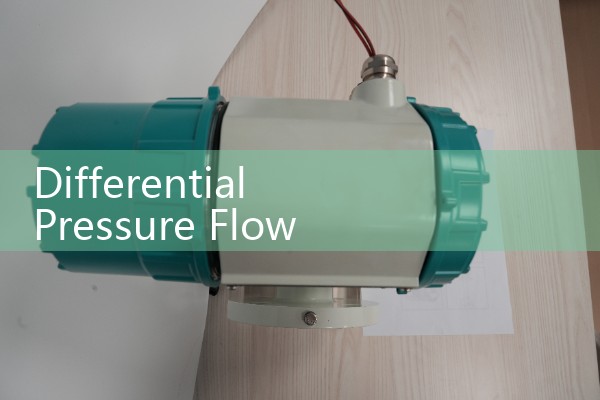
Most DP transmitters from Silver Automation Instruments have a basic accuracy of 0.075 percent of span. They output a 4-20 mA HART signal that represents either DP or linear flow. If the transmitter applies square root extraction, the 4-20 mA signal is linear with flow. If not, the DCS applies the square root. Do not mix both, because the totalizer will be wrong.
At very low flow, the DP signal becomes small and noisy. A low flow cut off at 0.5 to 1 percent of full flow prevents reading noise and false totalizer counts. This is normal, not a defect.
How to Specify a DP Flow Meter for Your Line
Send us the fluid type, flow range in kg/h or m3/h, pressure in bar, temperature in °C, and pipe size in DN. Include the pipe schedule or internal diameter. For liquid service, include viscosity in cP. With these data points, we select the primary element, transmitter calibration span, and material. We reply with a DP flow meter model and price from Silver Automation Instruments.
You can reach our engineers at Tel: +86-25-68650347, Whatsapp: +86-25-52155837, or WeChat: +86 15365082610. For more technical notes, visit flow-meter.com.au.
Frequently Asked Questions
Why does a DP flow meter use a square root function?
Because the differential pressure produced by a restriction is proportional to the square of flow velocity. Square root extraction converts the raw DP into a linear flow signal for display, totalizing, and control.
What is a typical turndown for a DP flow meter?
A standard orifice plate system has a 5:1 turndown. A well installed Venturi or wedge meter can reach 10:1. A dual span transmitter can extend this, but accuracy at the bottom 5 percent of range is limited by the square root relationship.
Which primary element is best for steam flow?
A flow nozzle or an orifice plate is common for steam. Use a stainless steel primary element, condensing pots, and a DP transmitter rated for high static pressure. For saturated steam, include a PT100 temperature sensor or a pressure transmitter for compensation to get a correct mass flow value.
Can a DP flow meter measure low viscosity liquids and gas?
Yes. Orifice plates, Venturi tubes, and flow nozzles work with clean low viscosity liquids and gases. Confirm the Reynolds number is above 5000 for stable DP readings. For dirty or high viscosity fluids, use a wedge meter or another technology.
What data does Silver Automation Instruments need for a quote?
Send us your fluid, flow range, pressure, temperature, and pipe size in DN. We also ask for the output signal and any hazardous area certification such as ATEX Zone 1. The engineering team will reply with a DP flow meter model, material, and price.
 Hot Blog
 Related AD