

 Current position > News detail
『16 Flow Meter: Sixteen-Inch Large Scale Pipeline Distributing Main Probes』Related information(flow rotameter|digital flow meter|balo meter|hydraulic flow meter|volumetric meter|positive displacement meter|pitot tube flow meter|displacement meter|cfm meter|variable area flow meter|inline flow meter|differential pressure flow meter|calibrated flow meter|velocity meter|paddle wheel flow meter|oval gear flow meter|anemometer hvac|multiphase flow meter|doppler flow meter|thorpe tube flowmeter|heat flow meter)
16 Inch Flow Meter: Sixteen Inch Large Scale Pipeline Distributing Main Probes
Quick Answer
A 16 inch flow meter with insertion probes measures large pipeline distributing main flow without cutting the line. Silver Instruments supplies DN400 insertion electromagnetic flow meters for conductive liquids and insertion thermal mass flow meters for gas and compressed air. Typical outputs are 4-20 mA HART and RS485 Modbus RTU. Accuracy on a straight run of 10D upstream and 5D downstream is often between 0.5 and 1.0 percent of rate.
Why Sixteen Inch Distribution Mains Need Probe Type Flow Measurement
DN400 mains move large volume at low to medium velocity. Full bore DN400 meters are heavy and expensive. Installation often requires shutting down the distribution main, draining a long pipe section, and welding flanges into place. Because water supply or cooling water cannot stop for a full day, many plant managers reject that option.
Here is the thing. A DN400 distribution main often feeds an entire zone, so shutdown cost is not just the meter job. Insertion probe flow meters avoid most of that work. You mount a ball valve and hot tap assembly on the pipe. The probe inserts through the valve under full line pressure. In practice we have supplied live line installations for municipal water in Vietnam and for cooling water headers in the Middle East.
Insertion electromagnetic probes work for conductive liquids from DN200 up to DN3000. Sixteen inch is common for district distribution mains because flow velocity usually sits between 0.5 m/s and 3 m/s. The probe reads velocity at a representative point inside the pipe and converts that value to flow rate in m3/h.
Fluids That Work with a Sixteen Inch Flow Meter Probe
Use an insertion electromagnetic flow meter for treated water, raw water, chilled water, cooling water, wastewater, and some food liquids. The minimum conductivity is around 20 µS/cm. If the liquid is deionized water or oil, an electromagnetic probe will not read correctly. In that case a clamp-on ultrasonic flow meter on the DN400 line is a better fit.
For air, nitrogen, natural gas, biogas, and compressed air headers, use an insertion thermal mass flow meter. Thermal mass probes work well on large distribution headers because they can be installed through a 2 inch valve and measure gas mass flow directly in kg/h or Nm3/h.
Key Specifications for DN400 Pipeline Distributing Main Probes
Most Silver Instruments DN400 probe meters cover 0.1 m/s to 10 m/s. Standard accuracy is ±1.0 percent of rate. With field calibration on the actual pipe some installations reach ±0.5 percent of rate. Outputs include 4-20 mA HART, pulse, and RS485 Modbus RTU. Power is 24 V DC or 85 to 265 V AC.
Wetted parts are usually 316L stainless steel, PTFE, PVC, or Hastelloy C for aggressive fluids. Standard temperature range is 0 to 60 °C. High temperature versions go up to 120 °C. Pressure ratings include PN10, PN16, and PN25. Enclosure protection is IP67 or IP68 for flooded pits. ATEX Zone 1 approvals are available for gas and chemical plant service.
Installation on a Live Sixteen Inch Main
For liquid service, weld a saddle or boss at the 10 and 2 positions on the pipe circumference. That position keeps the probe away from sludge at the bottom and trapped air at the top. Mount the ball valve and the hot tap assembly. Then lower the probe to the correct depth.
For a DN400 insertion electromagnetic flow meter the electrode should sit about 0.12D from the inner wall. In nominal terms that is around 48 mm for a DN400 pipe. That position gives a representative velocity reading in fully developed flow. Most engineers skip this detail but insertion depth changes accuracy more than any electronic setting.
Check the straight run. Standard installation needs 10D upstream and 5D downstream. For DN400 that means 4 meters of s
Recommended Silver Instruments Models for Sixteen Inch Applications
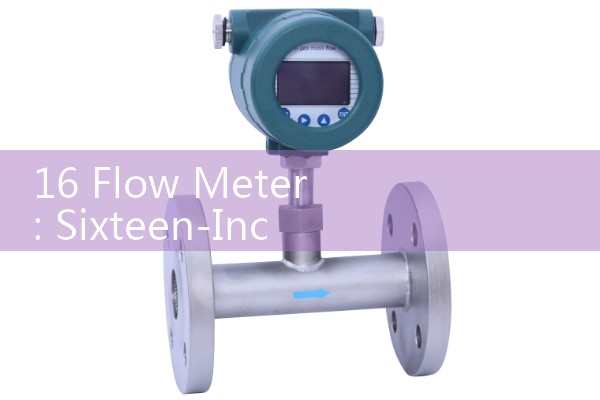
The SIL-PRO-EM400 model is an insertion electromagnetic flow meter for DN400 water and wastewater mains. The SIL-PRO-EM400 ships with a 2 inch ball valve assembly, 316L electrodes, PTFE liner, 4-20 mA HART, RS485 Modbus RTU, and hot tap hardware. Accuracy is ±1.0 percent of rate.
The SIL-TMF-400 model is an insertion thermal mass flow meter for DN400 gas headers. The SIL-TMF-400 measures compressed air, nitrogen, and natural gas up to 120 °C and 16 bar. Output is 4-20 mA HART plus Modbus RTU. ATEX Zone 1 is optional.
For non-conductive liquids or temporary flow checks on a DN400 main, the SIL-US-F400 clamp-on ultrasonic flow meter mounts outside the pipe. No hot tap is required. The SIL-US-F400 fits pipe sizes from DN50 to DN6000 and transmits flow data via 4-20 mA HART or Modbus.
Country Specific Use Cases
A water treatment plant in Vietnam needed flow data on a DN400 distribution main that fed three town zones. The pipe could not be drained. We supplied a SIL-PRO-EM400 with a hot tap assembly. The plant started logging flow within one day of receiving the meter.
A chemical site in Saudi Arabia used a SIL-TMF-400 on a nitrogen distribution header at 8 bar and 45 °C. The probe sent mass flow data to the PLC over HART. The site added ATEX Zone 1 approval for the installation area.
A beverage plant in Thailand installed a SIL-US-F400 on a DN400 chilled water main for a two week flow survey. The clamp-on meter avoided pipe cutting and matched the pump curve within 1.5 percent.
A mining water supply in Western Australia used a SIL-US-F400 clamp-on meter on a DN400 bore water main for a temporary flow survey. The meter was installed in 20 minutes and logged flow for ten days.
Frequently Asked Questions
Can a DN400 insertion flow meter be installed without shutting down the line?
Yes. Install a ball valve and hot tap assembly on the pipe. The probe inserts under full line pressure. Silver Instruments supplies retractable probes for live mains in water, gas, and air service.
What accuracy can I expect on a sixteen inch distribution main?
Standard accuracy is about ±1.0 percent of rate with 10D upstream and 5D downstream. Field calibration on the actual pipe can improve accuracy to ±0.5 percent of rate in many installations.
Does the insertion electromagnetic probe work on all sixteen inch liquid lines?
No. The liquid must be conductive, normally above 20 µS/cm. For deionized water or oil, use a clamp-on ultrasonic flow meter. For smaller diesel or oil lines, see our oval gear flow meter for diesel.
What output does Silver Instruments provide for DN400 flow meters?
Most models ship with 4-20 mA HART plus RS485 Modbus RTU. Pulse output for totalizing is standard on many insertion electromagnetic meters. You can also request a local display and data logger.
How deep should the probe sit in a DN400 pipe?
For insertion electromagnetic flow measurement the electrode should be placed around 0.12D from the inner wall. For DN400 nominal pipe that equals about 48 mm. That position provides a representative velocity reading in fully developed flow.
How to Request a DN400 Flow Meter Quote
Send us your fluid type, conductivity (µS/cm), pressure (bar), temperature (°C), pipe size (DN400 or other), flow range (m3/h), and required output. We will recommend a probe flow meter with hot tap hardware, saddle or flange connection, and ATEX option if needed.
Silver Automation Instruments
Tel: +86-25-68650347
Whatsapp: +86-25-52155837
WeChat: +86 15365082610
flow-meter.com.au