

 Current position > News detail
『Inline Flow Meter Installation: Best Practices for Maximum Accuracy』Related information(flow rotameter|digital flow meter|balo meter|hydraulic flow meter|volumetric meter|positive displacement meter|pitot tube flow meter|displacement meter|cfm meter|variable area flow meter|inline flow meter|differential pressure flow meter|calibrated flow meter|velocity meter|paddle wheel flow meter|oval gear flow meter|anemometer hvac|multiphase flow meter|doppler flow meter|thorpe tube flowmeter|heat flow meter)
Inline Flow Meter Installation: Best Practices for Maximum Accuracy
Quick Answer
Inline flow meter accuracy depends 70 percent on correct installation and only 30 percent on the sensor itself. A straight pipe run of 10D upstream and 5D downstream is the minimum rule for most inline meters, but Coriolis and positive displacement meters can handle much shorter runs. If you skip the grounding ring on a magmeter or install a vortex meter right after a control valve, expect readings to drift by 3 to 8 percent from day one.
Why Installation Mistakes Cost More Than the Meter
We see this on customer sites at least once a month. A plant buys a $3,200 Coriolis meter from us, installs it between two elbows with zero straight pipe, then emails support asking why the density reading fluctuates. The meter is fine. The pipe layout is the problem. A DN25 Coriolis meter can handle zero upstream straight pipe in theory. In practice, if you mount it directly between two out of plane elbows, the secondary flow patterns still mess with the low flow cutoff stability. The fix costs nothing during the design phase. After the pipe is welded and the process is live, the fix costs a weekend shutdown and new spool fabrication.
Here is the thing about inline versus insertion meters that many spec sheets skip. Inline meters sit directly in the process pipe between two flanges. The entire flow stream passes through the measurement chamber or sensor bore. This gives you the best possible accuracy, generally plus minus 0.1 to 0.5 percent of rate depending on technology. But it also means the meter body becomes part of the pipe stress system. If the pipe flanges are misaligned by 3 mm and you torque down the bolts to force the fit, you just pre loaded the sensor housing. On a Coriolis meter, that changes the tube stiffness and shifts the calibration. On a magmeter, you might crack the PTFE liner six months later when thermal expansion adds to the stress.
Straight Pipe Requirements by Meter Type
Different inline meter technologies need different upstream and downstream straight lengths. Do not apply the same rule to all of them. A paint manufacturer in Vietnam learned this the hard way last year. They replaced an old turbine meter with a vortex flow meter on a solvent line and kept the same 5D upstream run. The turbine had been fine with that layout for years. The vortex meter read 12 percent high at low flow because the flow profile was still distorted from the partially open gate valve 5D upstream. Vortex meters need a fully developed flow profile. The bluff body shedding frequency relies on a stable velocity distribution across the pipe cross section.
Here are the straight pipe numbers we recommend in our installation manuals, based on field verification across hundreds of installations:
Electromagnetic flow meters need 10D upstream and 5D downstream for most installations. If you have a control valve or two 90 degree elbows in different planes upstream, increase to 20D upstream. Magmeters measure voltage across the fluid. Swirl and asymmetric flow profiles create noise in the electrode signal. A DN50 magmeter on a water treatment skid in Saudi Arabia was reading 4 percent low until the customer added a flow straightener. The issue was a butterfly valve mounted only 4D upstream. The butterfly disc was partially closed during normal operation, which sent a spiral flow pattern straight into the meter.
Vortex flow meters demand the most straight pipe among common inline technologies. Minimum 15D upstream and 5D downstream. If a control valve is upstream, go to 30D. The vortex shedding phenomenon needs a clean velocity profile. Distorted flow produces irregular shedding frequencies. The meter electronics interpret those as flow noise. You will see the 4 to 20 mA signal jitter by 2 to 3 percent even if the average reading looks correct.
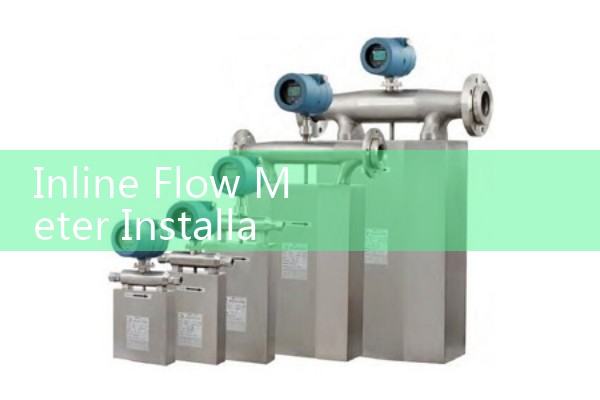
Coriolis mass flow meters are the exception. Because they measure mass directly via tube vibration, not velocity, they tolerate extremely short straight runs. Most DN15 to DN50 Coriolis meters can be installed with zero upstream straight pipe. The meter creates its own measurement condition inside the vibrating tubes. However, we still recommend mounting the meter so that the process connection alignment is stress free. Pipe strain is the real enemy for Coriolis accuracy, not flow disturbances.
Oval gear and positive displacement meters also handle short straight runs well. A gear meter measuring diesel at a fuel depot in Australia can sit right after a strainer with only 3D of pipe between them. The mechanical meshing of the gears is what meters the flow. The inlet flow profile barely matters as long as the liquid fills the measuring chamber completely.
Orientation and Flow Direction
Most inline flow meters have an arrow cast into the body. Match it to the actual flow direction. Seems obvious, we know. But about one in 30 installations gets this wrong, especially when the pipe is vertical and the flow goes downward. The installer looks at the general layout, assumes flow goes upward, and bolts the meter in ba
For liquid applications, mount the meter in a location that stays full at all times. Vertical pipes with upward flow are ideal. Gravity helps keep the pipe flooded. Horizontal installations work too, but make sure the meter is at a low point in the piping so gas cannot accumulate. On magmeters, the electrodes must be in the horizontal plane for horizontal pipe runs. If the electrodes are at 12 o clock and 6 o clock positions, any air bubbles at the top of the pipe will insulate the top electrode and the meter will drop out.
Gas flow meters need different thinking. Thermal mass flow meters and vortex meters on gas lines can be mounted horizontally or vertically. The key is avoiding liquid accumulation. Any condensate pooling in the sensor will throw off a thermal meter by 5 to 10 percent because the heat transfer calibration assumes dry gas properties.
Grounding and Electrical Noise
Electromagnetic flow meters need proper grounding or they will drift. The signal from the electrodes is in the microvolt range. Any stray current in the pipe will drown that signal. Most Silver Instruments magmeters ship with grounding rings or a grounding electrode as standard. If your pipe is metal with a conductive inner surface, connect the grounding ring to the pipe flanges and run a 4 mm² copper wire to a dedicated earth stake. Do not share the earth with VFD motor drives. We have seen a magmeter reading go from stable plus minus 0.2 percent to bouncing 3 percent when a pump VFD was switched on 15 meters away.
For plastic pipes or lined metal pipes, you need grounding rings on both sides of the meter. The process liquid must be electrically connected to the meter ground. Without this, the meter is floating and any electromagnetic interference from nearby cables will couple into the signal circuit.
Coriolis meters are less sensitive to grounding issues for the measurement signal. But the transmitter electronics still need a clean 24 V DC power supply. Do not run the signal cable in the same conduit as the power cable. Keep the 4 to 20 mA HART loop separated. Use twisted pair shielded cable and ground the shield at the control system end only. Grounding both ends creates a ground loop that adds 50 or 60 Hz hum to the analog signal.
Temperature and Environmental Factors
Inline meters mounted outdoors in the Middle East or Southeast Asia face two problems. Direct sun heats the transmitter housing to 70 or 80 degrees Celsius. The LCD display goes black. The electronics drift. For custody transfer meters in Dubai or Dammam, always install a sunshade. It costs $50 and saves you a service call every six months.
The second problem is humidity and condensation inside the terminal compartment. After a cool desert night, the morning sun warms the housing. The air inside expands and draws in moist outside air through the cable gland threads. Over a month, the terminal block corrodes. Use proper IP68 cable glands and fill the terminal compartment with a desiccant pack. For permanently humid environments like a fish processing plant in the Philippines, we spec the meter with an IP68 rated housing and potted electronics.
High temperature process fluids need attention to the meter liner and seal materials. A standard PTFE liner on a magmeter works up to 150 degrees Celsius. Above that, go to PFA liners rated for 180 degrees Celsius. The rubber gaskets between flanges degrade faster than anyone expects at sustained 120 degrees Celsius. EPDM gaskets harden and crack. Viton or PTFE envelope gaskets cost more but last five times longer on hot water and steam condensate lines.
Commissioning and Zero Check
Before you leave the site after installation, do a zero check. Fill the pipe with the process fluid at static conditions, no flow, at normal process pressure. On a Coriolis meter, run the zero calibration procedure. It takes 60 seconds. On a magmeter, check that the empty pipe diagnostic is off and the flow reading shows less than 0.1 percent of full scale. On a vortex meter, verify the 4 mA output corresponds to zero flow.
A customer in Indonesia skipped this step on a 3 inch Coriolis meter measuring palm oil. The meter was reading 45 kg per hour with the pump off. The pipe was full and static. The issue was pipe strain from a misaligned flange putting torque on the sensor housing. After loosening the bolts, realigning the spool, and retorquing in a star pattern, the zero point dropped to 0.2 kg per hour. That 45 kg per hour offset would have been a 2.6 ton error per day of continuous operation.
Most engineers skip the zero check because the process is already running and they are under time pressure. Plan the installation so the pipe can be filled and valved off for 15 minutes of zero verification. It is the cheapest accuracy insurance available.