

 Current position > News detail
『Aviation Fuel Flow Meter: Aircraft Engine Mass Fuel Logbooks』Related information(flow rotameter|digital flow meter|balo meter|hydraulic flow meter|volumetric meter|positive displacement meter|pitot tube flow meter|displacement meter|cfm meter|variable area flow meter|inline flow meter|differential pressure flow meter|calibrated flow meter|velocity meter|paddle wheel flow meter|oval gear flow meter|anemometer hvac|multiphase flow meter|doppler flow meter|thorpe tube flowmeter|heat flow meter)
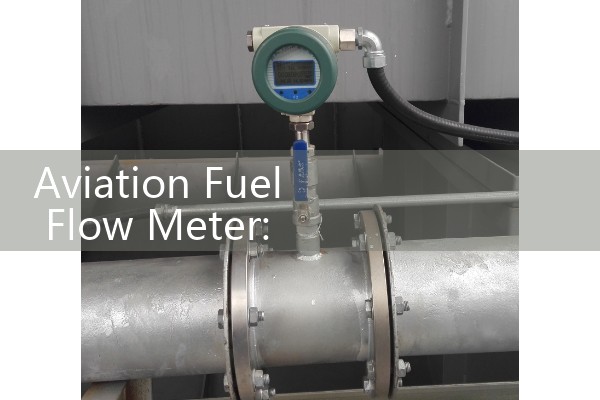
Aviation Fuel Flow Meter: Aircraft Engine Mass Fuel Logbooks
Quick Answer: For aircraft engine fuel logbooks, you need a mass flow meter that records kilograms per hour directly, not volume. A Coriolis mass flow meter from Silver Instruments gives you ±0.1% mass accuracy without density corrections, ATEX Zone 1 certification, and a digital output ready for logbook entries. Send us your fuel type, pipe size (DN), and max flow rate, and we will recommend a meter that matches your ground support or test cell setup.
Jet fuel mass is what aircraft logbooks care about. Volume readings shift with temperature. A 1% density change on a wide-body refueling rig can mean 200 kg of unaccounted fuel. Most engineers skip the volume-to-mass conversion step. They choose a Coriolis meter that spits out kg, tonnes, or lb directly.
We have seen this on customer sites many times. A maintenance base in Singapore switched from turbine meters to our CMF series Coriolis meter. Their reason was simple. Fuel arriving at 35°C outside the hangar and fuel stored underground at 18°C gave density swings of 2.5%. The turbine meter needed live density input from a separate densitometer. That extra device broke twice in one year. The Coriolis replacement eliminated the densitometer and the logbook correction tables. The crew now reads mass total on a local display and pushes the value straight into the digital logbook via Modbus RTU.
Why Mass Flow Matters for Aviation Fuel
Aircraft logbooks track fuel mass loaded or consumed, never volume. Regulatory paperwork under EASA and FAA rules expects mass figures. A volumetric flow meter plus manual density sampling creates a chain of corrections. Mistakes happen. We once audited a fuel farm in the Middle East where hand-written density values were off by 0.8% for six months. That added up to several tonnes of unaccounted Jet A-1. With a Coriolis mass meter, there is no density input needed. The meter measures mass directly using the Coriolis effect. Viscosity changes up to 12 cSt at low temperatures do not affect the mass reading. This is true direct mass flow, not calculated mass.
How a Coriolis Meter Fits into Fuel Logbook Workflows
Most ground fueling carts and engine test benches use DN15 to DN50 pipe. Our CMF series covers that range with stainless steel 316L wetted parts. The meter outputs a 4-20 mA HART signal for mass flow and a pulse output for totalization. You can send the totalized mass directly to a Silver Instruments paperless recorder with batch log function. The recorder timestamps each fuel transaction and stores it in an uneditable PDF logbook. That is your electronic mass fuel logbook, compliant with digital record rules. If you still keep a paper logbook, the local display shows total mass in kg with eight digits. The operator writes that number once per shift. No calculation, no correction factor.
We heard from a helicopter operator in Chile. They fuel up at remote pads where temperature swings from 0°C at dawn to 30°C by noon. Their old positive displacement meter gave volume only. The pilot had to multiply by a density figure from a laminated card. That card had 2019 data. Now they use a portable Coriolis skid from Silver Instruments. The skid has a DN25 CMF meter, battery power, and a simple printout of mass delivered. The logbook entry is fast and error-free.
Key Specifications That Matter
Do not focus on fancy features you never need. Here is what actually solves logbook problems.
Mass accuracy: ±0.1% of rate for liquids. Enough to catch discrepancies before an engine run.
Density range: 0.2 to 2.0 g/cm³. Jet A-1 sits around 0.79-0.82 g/cm³. The meter measures density as a free secondary variable. You can trend density to detect fuel batch quality issues.
Temperature rating: Process from -50°C to +200°C. Arctic fuel operations at -40°C are fine. The sensor handles cold starts without pre-heating.
Hazardous area: ATEX Zone 1, II 2G Ex ia IIC T6…T1. NEC Class I Div 1 available.
Outputs for logbook integration: Modbus RTU, Ethernet/IP with mass totalizer registers, 4-20 mA HART. Most customers pull mass total via Modbus into a PLC that generates the electronic logbook entry.
Wetted materials: 316L stainless steel. Compatible with Jet A-1, Jet B, Avgas 100LL, and bio-jet blends up to 50%.
Real Numbers from a Test Cell Setup
Last year a customer in Vietnam asked us for a mass flow solution on an engine test bench. The engine was a PW150A turboprop. Fuel flow range was 80 kg/h idle to 450 kg/h full power. We recommended a DN15 Coriolis me
What to Look for in a Fuel Logbook-Ready Meter
Ask yourself these questions before you email us.
Does the meter measure mass natively? Coriolis is the only practical choice for direct mass flow in this application. Thermal mass meters are for gases. Ultrasonic meters give volume.
Is the totalizer non-resettable or password-protected? Our CMF totalizer can be locked so that logbook records cannot be tampered with.
Can I get a digital twin of the logbook entry? With Silver Instruments paperless recorders, you get an encrypted CSV and PDF copy for audits.
What certification do I need for a fuel farm? The meter should have an ISO 17025 calibration certificate traceable to national standards. We provide that as standard with oil mass calibration.
What if I need to move the meter between fueling points? We build portable skids with wheels, flexible hoses, a battery, and a printer. Used often in African bush strips and island airports.
How to Get a Quote That Matches Your Logbook Needs
Do not just say “send me a price for an aviation fuel flow meter.” That wastes your time and ours. Send us the following:
- Fuel type (Jet A-1, Jet B, Avgas 100LL, bio-jet blend)
- Operating pressure (bar) and temperature range (°C)
- Pipe size (DN) and connection type (BSPP, NPT, Tri-clamp, ANSI flange)
- Flow range: minimum and maximum in kg/h or lb/h
- Hazardous area classification (Zone 1, Zone 2, Div 1)
- Logbook output: 4-20 mA HART, Modbus RTU, Ethernet/IP, or paperless recorder
- Any special government or airline audit requirements
Email us at [email protected] with the subject line “Aviation fuel mass flow logbook request.” Our engineers usually respond within one working day with a datasheet, a model code string, and a price indication EXW Nanjing. For urgent requests, reach us on WhatsApp at +86-25-52155837 or call +86-25-68650347. WeChat is also available at +86 15365082610.
Frequently Asked Questions
Q: Can a Coriolis meter handle the low flow during engine idle in a test cell?
A: Yes. A small DN15 or DN10 sensor will measure down to 2-5% of full scale with published accuracy. We size the sensor so your minimum flow is at least 5% of the meter range. At that point, accuracy is around ±0.2% of rate, still acceptable for logbook records.
Q: How do I integrate the mass total with an existing aircraft logbook software?
A: Most software accepts Modbus RTU 32-bit holding registers. The CMF meter gives mass total as a pair of 16-bit registers. You poll those once per second and write the last value when the fueling event ends. If the software has an OPC UA client, we can add an OPC UA gateway. Tell us your protocol, and we will suggest the right output board.
Q: Does the meter need periodic recalibration?
A: We recommend a zero check every 6 months under process conditions. Full calibration interval is typically 1 to 2 years. A field zero check takes less than 10 minutes. You block the meter tube full of fuel, vent any air, and press the zero button. The display shows the zero offset in kg/h. If it’s within your allowed error, you’re done. No need to send the meter out.
Q: Can I use one meter for both fueling and defueling?
A: Yes. Coriolis meters measure bidirectional flow automatically. The totalizer can count net mass (fuel in minus fuel out) or separate forward and reverse totals. A ground power cart operator in Australia uses this to calculate net fuel delivered, which matches the cockpit’s fuel quantity indicator within 20 kg per leg.
Q: What if my fuel system has air bubbles?
A: The Coriolis meter can detect two-phase flow. When air entrainment exceeds 1-2% by volume, the meter drive current increases and triggers a status alarm. You can use that alarm to stop fueling until air is purged. This prevents phantom mass readings that could inflate logbook totals.
How to order or get more help: Email [email protected], call +86-25-68650347, or message us on WhatsApp: +86-25-52155837. WeChat: +86 15365082610. Visit our website at https://flow-meter.com.au for Coriolis mass flow meter datasheets and selection guides.